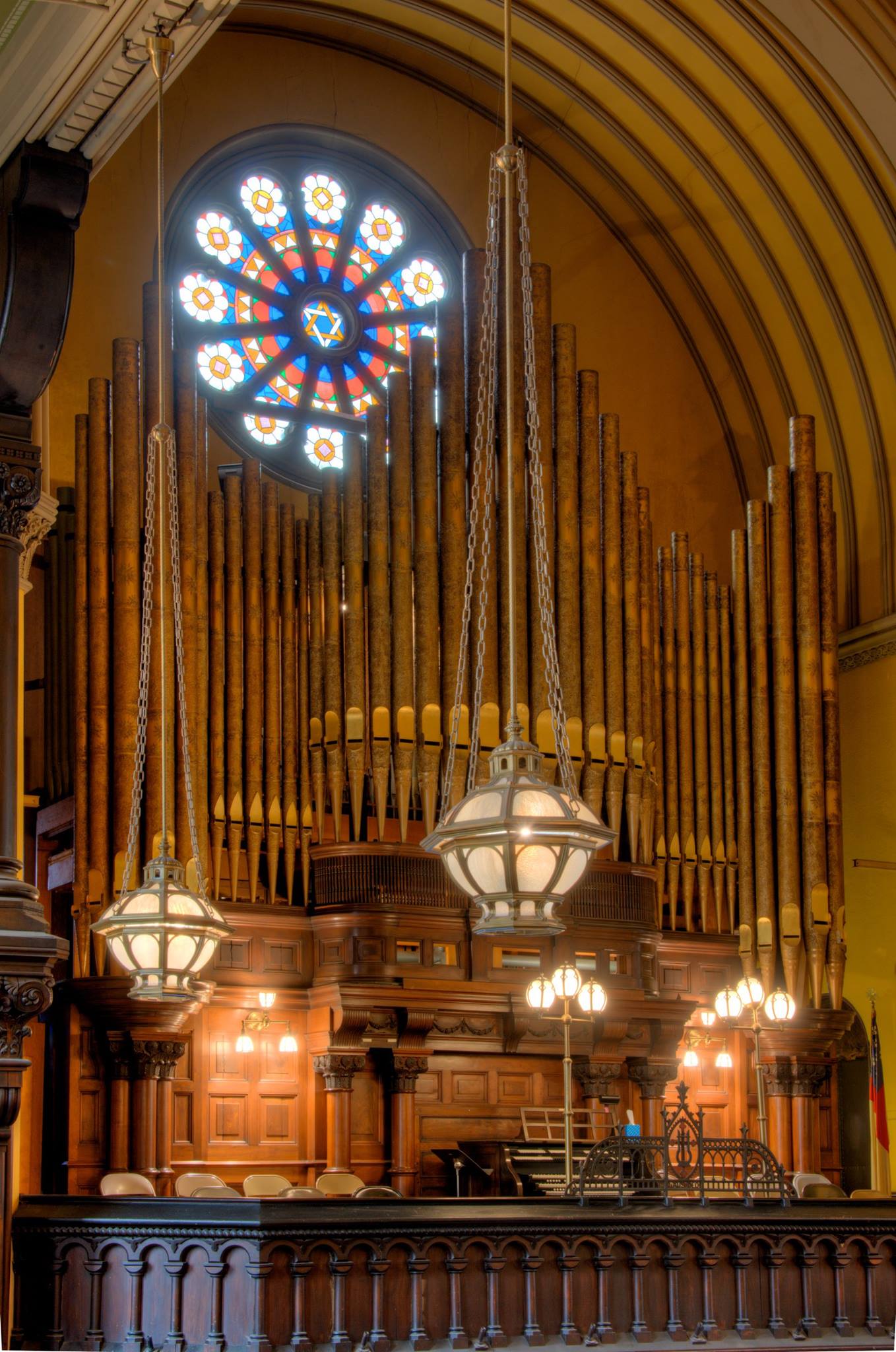
Arrive at 10:40 a.m. to listen to the start of the prelude for the Nov. 2, 2025 All Saints Service. The prelude will be played by Organist Rich Spotts.
November 2 is the Sunday within the Octave of All Saints. All Saints—celebrated on November first—is a cross-quarter festival (like Candlemas, which is celebrated on February second), meaning it marks the halfway point between the autumnal equinox and hibernal solstice. All Saints (or All Hallows or Hallowmas—hence Halloween or “Hallows E’en”) had its origination in the ninth century on the British Isles, a tradition that later was extended to the whole Occidental Church by Pope Gregory IV. It is an amalgamative feast celebrating sainthood as a whole—those known and unknown and of varying graces.
All Saints is not to be confused with All Souls, which is celebrated on November second. While commemorations for the departed had a long and varied observance in the early Church, Saint Odilo of Cluny (circa 962–1049) instituted for all the monasteries dependent upon the Abbey of Cluny the annual commemoration of all the faithful departed to be on the day after All Saints, after which, this observance spread from Cluniac monasteries to the Benedictines, and then to the wider Church, beginning with the Diocese of Liège under Bishop Notger (obiit 1008) and then Rome in the thirteenth century. Traditionally, Requiems were (and still are) said at the catafalque in remembrance of the departed.
This prelude is the Office for the Feast of All Saints from “L’Orgue Mystique” by Charles Tournemire (1870–1939). The texts for the first three movements are rife with saintly imagery: Prélude à l’introït: “Rejoice we all in the Lord, keeping holy-day in honour of all the Saints: In whose solemnity the Angels rejoice and glorify the Son of God. Rejoice in the Lord, O ye righteous: For it becometh well the just to be thankful.” (Psalm xxxij/xxxiij); Offertoire: “The souls of the righteous are in the hand of God, and there shall no torment touch them: in the sight of the unwise they seemed to die, but they are in peace, alleluia.” (Wisdom of Solomon iij); Élévation: “The glorious company of the Apostles praise thee; the goodly fellowship of the Prophets praise thee; the white-robed army of Martyrs praise thee; all thy Saints and Elect with one voice do acknowledge thee, O blessed Trinity, One God.” (Te Deum laudamus, Ambrosian Hymn, IV century). The fourth movement (Communion) is based upon the Beatitudes, which is the Gospel for All Saints: “Blessed are the pure in heart, for they shall see God: blessed are the peace-makers, for they shall be called the children of God: blessed are they that are persecuted for righteousness’ sake, for theirs is the kingdom of heaven.” (Saint Matthew v)
The final movement is based upon a traditional hymn for All Saints—“Placare, Christe, Servulis”. Attributed to the Archbishop of Mainz, Rabanus Maurus (776–856), it is traditionally sung at Vespers for this feast. The prelude setting (“Choral”) is a tone poem depicting the travails of sainthood and the ultimate apotheosis of the soul.